What makes a microcement surface different
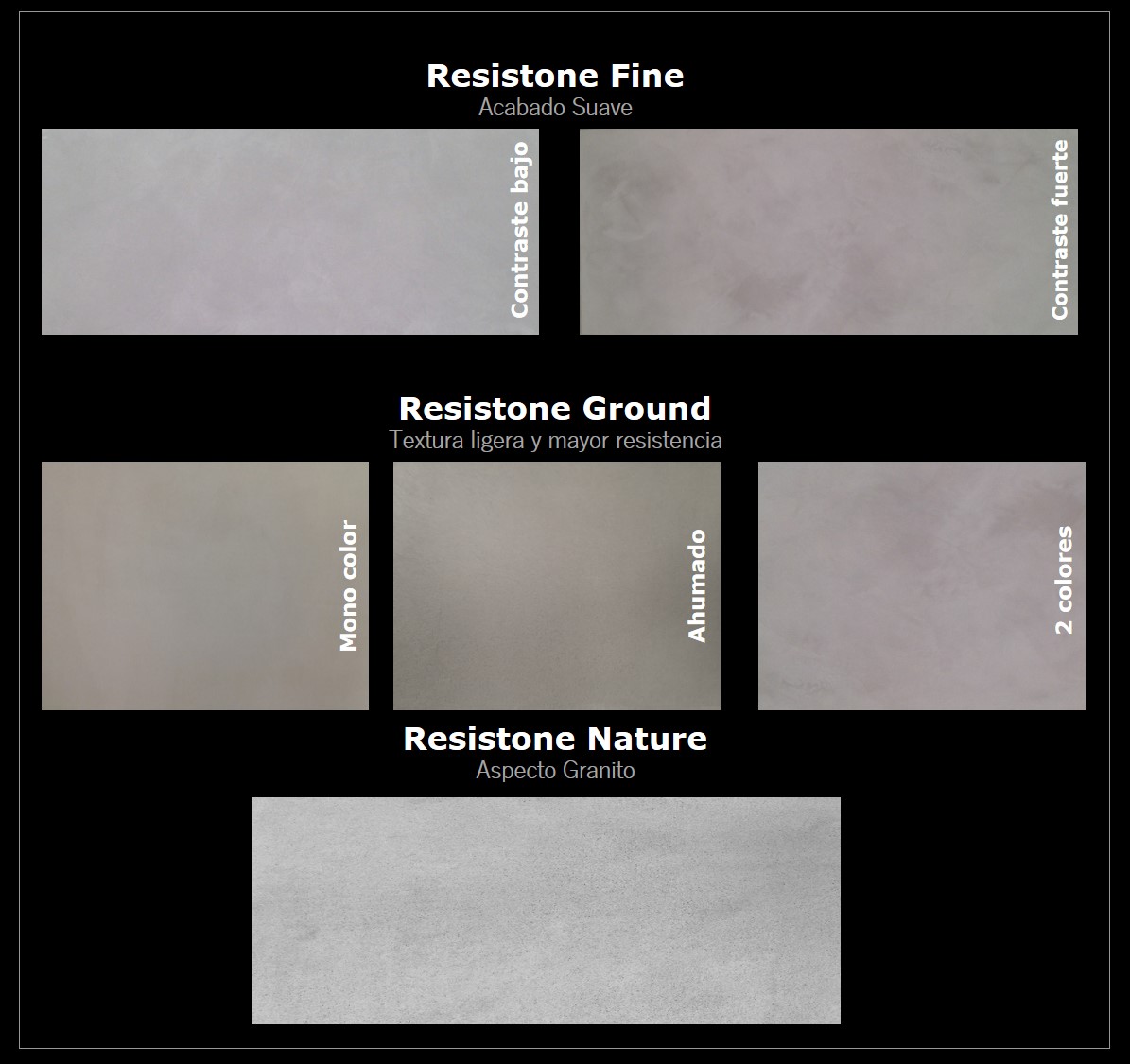
Microcement creates continuous spaces: the floor runs into the wall, the shower or a piece of furniture without a single joint. Every application is done by hand, so the clouding (the soft tonal variations left by the trowel) makes every surface unique.
It is applied in thin layers of about 2–3 mm over cement, tiles, plaster or plasterboard. Depending on the substrate and use, a system has 2 to 9 coats of products made with hydraulic binders, resins, fine aggregates and additives.


Where it is used
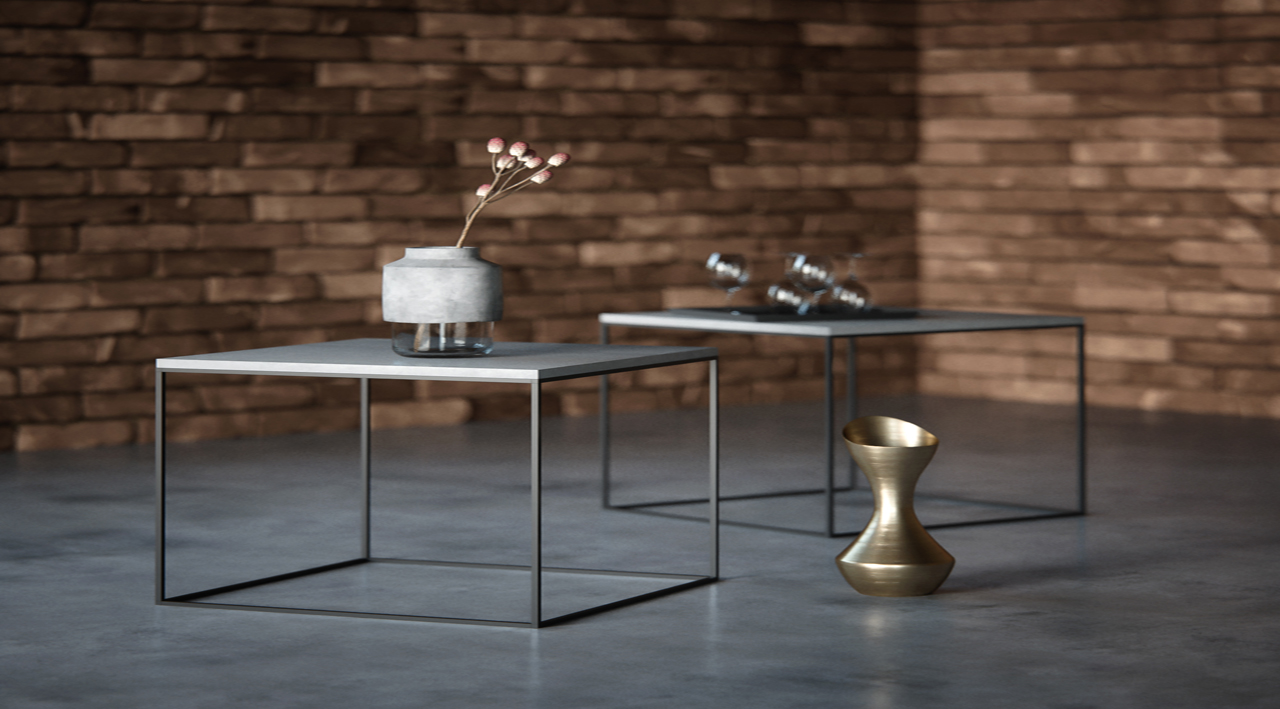
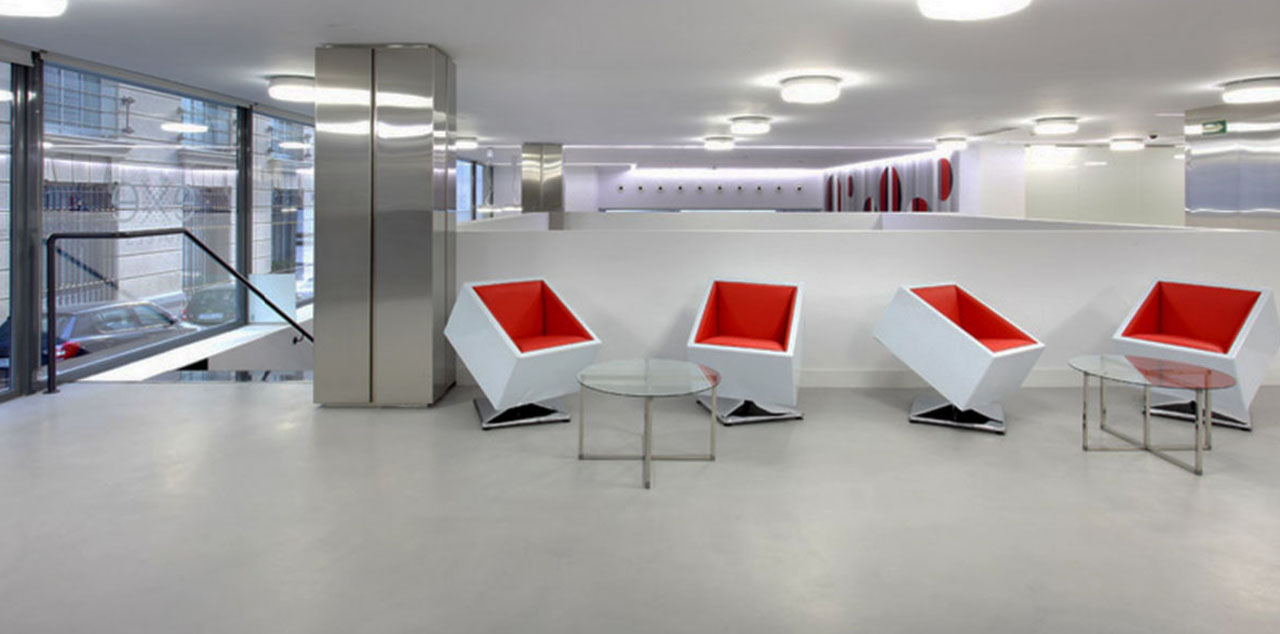
Floors, walls, bathrooms, kitchens, stairs, bedrooms and furniture, indoors and outdoors. With the right systems, also pools and façades.
Colour
Choose from the Resistone colour chart or ask for a custom colour. The chart is organised in families:
- Cool greys: Nácar, Plata, Hierro.
- Mid greys: Perla, Piedra, Acero, Pizarra.
- Earth tones: Caliza, Crema, Tierra, Quarzo, Turba.
- Greenish greys: Olivo, Cemento, Musgo.

On-screen colours are approximate. Monitor settings, the thickness of each coat, substrate absorption and the hand application itself all change the final result. The best way to decide is to see real samples. If you are torn between shades, read how to choose the colour.
Finish
The final sealer comes in matt, satin or gloss. You can also play with texture: smooth and fine, sandy, or with more or less pronounced clouding.