

Power-floated or polished concrete
A layer of cement and quartz aggregate is worked into fresh, half-set concrete to smooth it. It can be left floated, polished or semi-polished.
- It needs expansion joints and thicknesses of more than 6 cm.
- It tends to crack and is a messy job.
- It can show efflorescence stains and damp.
- Widely used in car parks, garages and high-traffic outdoor areas; indoors its aesthetics are limited.
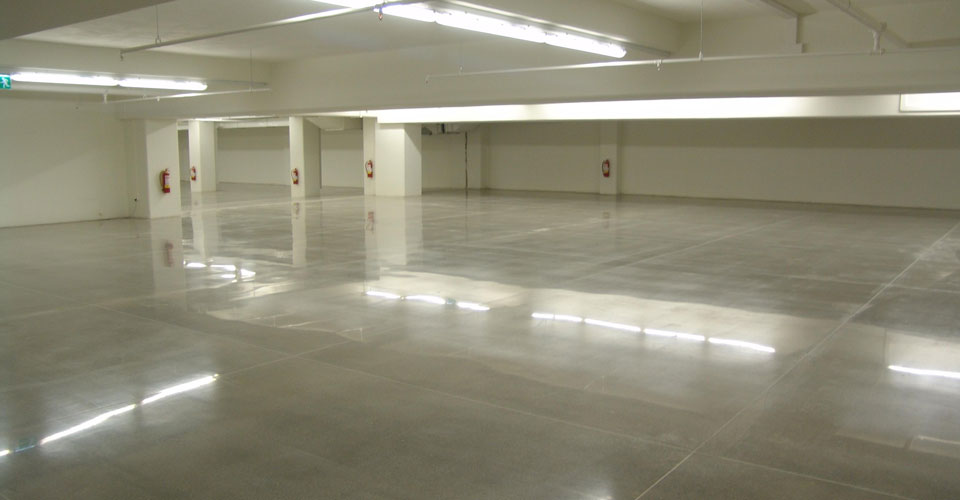
Concrete floors fall into two families: floated or polished, and printed or stamped, made with moulds imitating other shapes.
Microcement
A 2–3 mm coating with resins and additives, applied over the existing substrate. It avoids the drawbacks above: no joints, no demolition, much less tendency to crack, and suitable for walls, bathrooms and furniture.
Comparison
| Polished / floated concrete | Microcement | |
|---|---|---|
| Thickness | More than 6 cm | 2–3 mm |
| Joints | Required | None |
| Over the existing floor | No | Yes |
| Cracks | Frequent | Rare with a good system |
| Walls and furniture | No | Yes |
| Typical use | Car parks, garages, outdoors | Homes, shops, bathrooms, kitchens |