
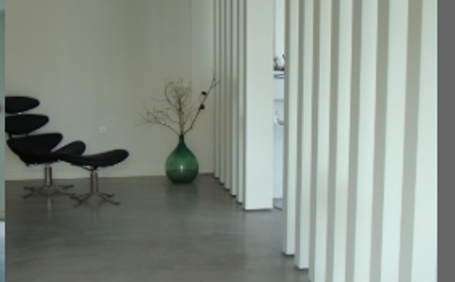
Where it can
- Cement and mortar
- Ceramic and porcelain tiles
- Marble and terrazzo
- New or old concrete
- Self-levelling screeds
- Plaster and plasterboard
- Metal
- Built-in furniture
By surface or room:
- Floors and walls.
- Bathrooms: showers, bathtubs and washbasins, with the right waterproofing.
- Kitchens and stairs.
- Furniture.
- Pools, outdoor floors and façades.
- Extreme environments: saunas, cold rooms and fireplaces.
- Over underfloor heating, with no heat-transfer issues.
Where it cannot
Parquet, floorboards and wooden coverings. They must be removed first.
How the substrate should be
- Dry and clean, free of dust and grease.
- No loose pieces: they are fixed first.
- Cured screed: if it is recent, you have to wait.
- No rising damp: if there is, waterproof first.
If you ask for a quote, send photos of the substrate: they help assess the preparation needed. More details in what to know before laying a microcement floor.