
Cracks
This is the biggest worry. A seamless coating has no expansion joints, so it suffers the movements of the base: cracks in the slab or plaster wall, tiles moving through settlement or temperature changes.
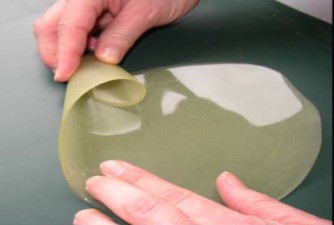
How to avoid them: with a system elastic enough to absorb those movements, especially in the lower coats, and good substrate preparation (fixing loose pieces, fibre mesh on floors). Our EP-Elastic base reaches 110 % elongation at break.
Stains
Microcements are hydrophilic: they attract and absorb water. They are protected with sealers (usually polyurethanes), but any failure — incomplete coverage, a pore, a sealer with poor chemical resistance — lets liquid through and stains the mortar for good.
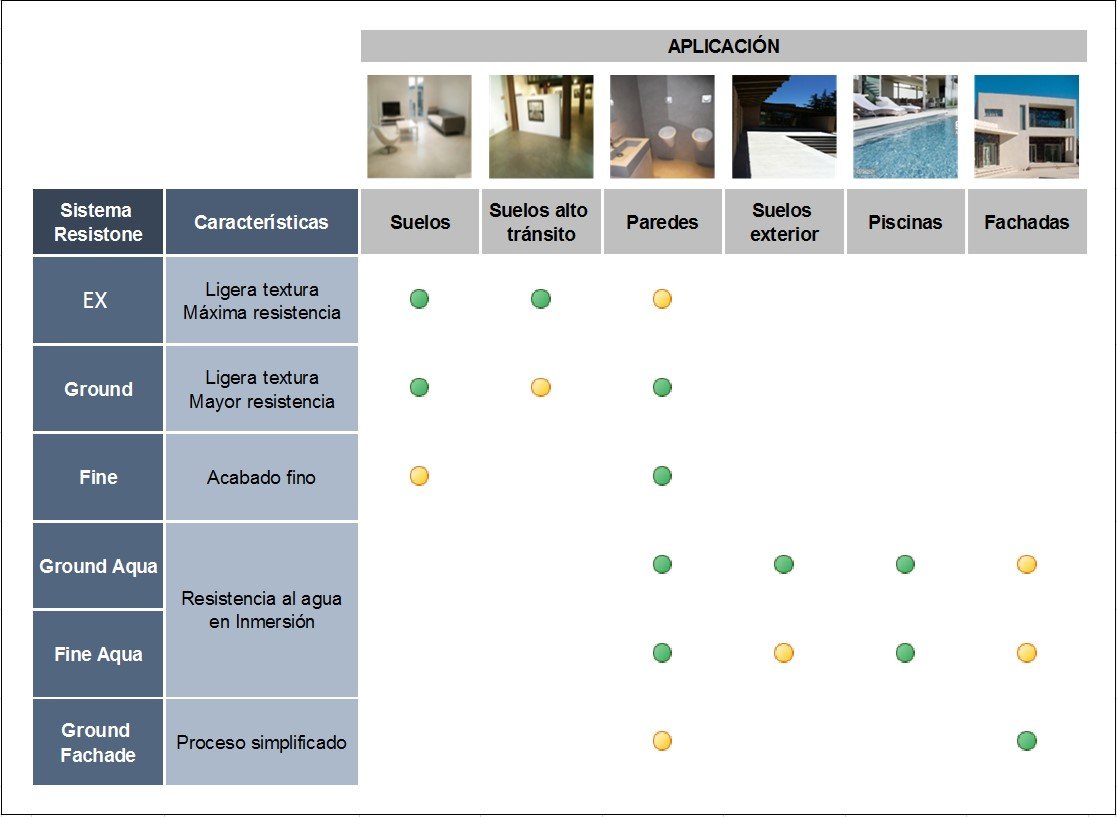
How to avoid them: with a microcement of low absorption in its mass and a good sealing system. Resistone EX resists water even before sealing.
Low resistance
Two kinds matter:
- Compression: heavy objects resting or being dragged, heels, furniture legs.
- Scratching: sharp objects, above all grains of sand on shoes or chair legs.
A seamless floor is not fired at thousands of degrees in a factory, so it does not reach the hardness of some prefabricated materials. Even so, Resistone EX achieves far higher resistance than a conventional microcement: no problems with stiletto heels or wheelchairs. See the tests.
Aesthetics
Over-pronounced clouding that looks like stains, or no clouding at all and a flat finish. It depends on the formulation and the applicator's hand. Resistone is formulated to give soft, subtle clouding and to be easy to work.
How to protect yourself
- Ask for the technical data sheet and test results of the system.
- Insist on a substrate assessment before the quote.
- Ask about the applicator's training and the guarantee.